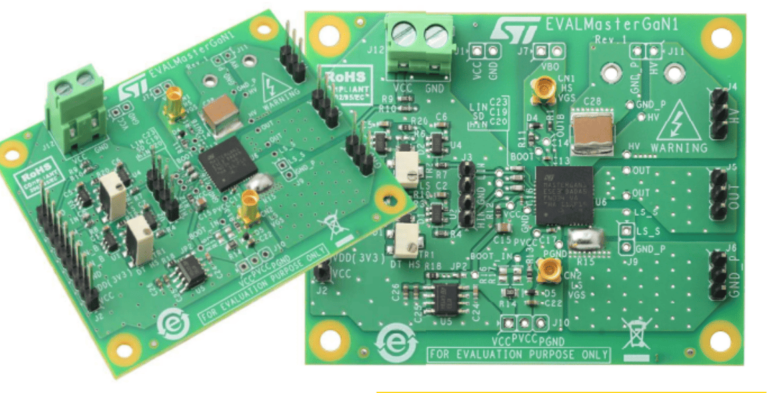
While the world focuses on the computational performance, manufacturing processes, and immense processing power of AI chips, little attention is paid to the unsung “power gatekeepers” that keep these high-performance chips running. Though they do not perform computations themselves, these components are tasked with the critical roles of controlling current, converting voltage, and minimizing power loss—found everywhere from mobile phone chargers and electric vehicles to massive AI data centers.
These behind-the-scenes heroes are known as power semiconductors. As the electricity demands of AI data centers climb, improving power conversion efficiency and reducing energy waste have become vital priorities for the tech industry, bringing power semiconductors back into the spotlight. But what types of power semiconductors exist, what materials are they made from, and how do these various components and materials differ?
What are power semiconductors? How do MOSFETs, IGBTs, and diodes divide the workload?
In simple terms, power semiconductors are key components used to control and convert electrical power. They are essential for functions ranging from current switching and rectification to circuit protection, and are widely used in power supply units, electric vehicles, industrial equipment, and renewable energy systems. Unlike chips designed for data computation and logic processing, power semiconductors focus on managing the flow of current; working in tandem with circuit designs, they convert electrical power into the specific voltage and current levels required by a device.
Based on their function and structural design, power semiconductors primarily include diodes, metal-oxide-semiconductor field-effect transistors (MOSFETs), and insulated-gate bipolar transistors (IGBTs). Diodes are mainly used for rectification, freewheeling, and circuit protection. MOSFETs, characterized by their high-speed switching capabilities, are widely employed in server power supplies and DC/DC converters. IGBTs, meanwhile, are suited for high-voltage, high-power applications, commonly appearing in equipment such as industrial motor drives and inverters.
From Silicon (Si) to Silicon Carbide (SiC) and Gallium Nitride (GaN): How do these materials differ?
Beyond their structural design, the semiconductor materials used also influence a power component’s voltage tolerance, switching speed, thermal performance, and manufacturing cost. Common materials currently in use include silicon (Si), silicon carbide (SiC), and gallium nitride (GaN), each offering distinct technical advantages and serving specific application areas.
Traditional silicon-based power components benefit from mature manufacturing processes, relatively low costs, and well-established supply chains; they remain widely used in consumer electronics, server power supplies, and industrial equipment. However, as power systems evolve toward higher voltages, greater efficiency, and increased power density, wide-bandgap semiconductors like SiC and GaN are gaining significant market attention.
SiC and GaN are often categorized as “third-generation” semiconductors, both characterized by a wide bandgap—the energy required for an electron to transition from the valence band to the conduction band. The bandgaps of SiC and GaN are approximately three times that of traditional silicon. Furthermore, they possess a higher critical breakdown electric field, which facilitates the development of high-voltage power components; through optimized device structures and circuit designs, these materials can further reduce power conversion losses.
Specifically, SiC offers high voltage tolerance and high thermal conductivity, making it well-suited for electric vehicle (EV) traction inverters, industrial power supplies, and high-power energy conversion equipment. GaN, meanwhile, is noted for its high-speed switching capabilities and low parasitic capacitance, making it ideal for high-frequency DC/DC converters and high-power-density power supply systems.
From EVs to AI: What Will Drive the Next Wave of Competition in Power Semiconductors?
While electric vehicles, industrial equipment, and renewable energy have historically been key growth drivers for power semiconductors, the recent slowdown in certain EV market segments—coupled with intensifying price competition—has led industry players to shift their focus toward AI data centers. As GPU computing power grows and rack power densities continue to rise, minimizing power conversion losses and managing thermal loads have become critical challenges for power supply systems.
From traditional silicon-based components to third-generation semiconductors like SiC and GaN, each material is suited to specific applications. The future of competition in the power semiconductor sector will depend not only on the performance of the components themselves but also on a company’s ability to strike the right balance between conversion efficiency, cost, and reliability—ultimately meeting the increasingly complex power delivery requirements of AI data centers.